A historic and devastating financial milestone has been reached in the Middle East. The Iranian Rial collapse has accelerated to unprecedented levels, with the currency crossing the psychological barrier of 1,000,000 Rials per 1 US Dollar on the unofficial market.
This dramatic devaluation represents more than just numbers on a screen; it signifies the total erosion of purchasing power for millions of people. As the national currency enters freefall due to sanctions, geopolitical tensions, and economic mismanagement, the world is watching closely.
For investors and crypto enthusiasts, the Iranian Rial collapse serves as a stark warning about the fragility of fiat currencies and highlights the critical importance of decentralized assets like Bitcoin and Stablecoins.
1. The Numbers: 1 USD = 1,000,000 IRR
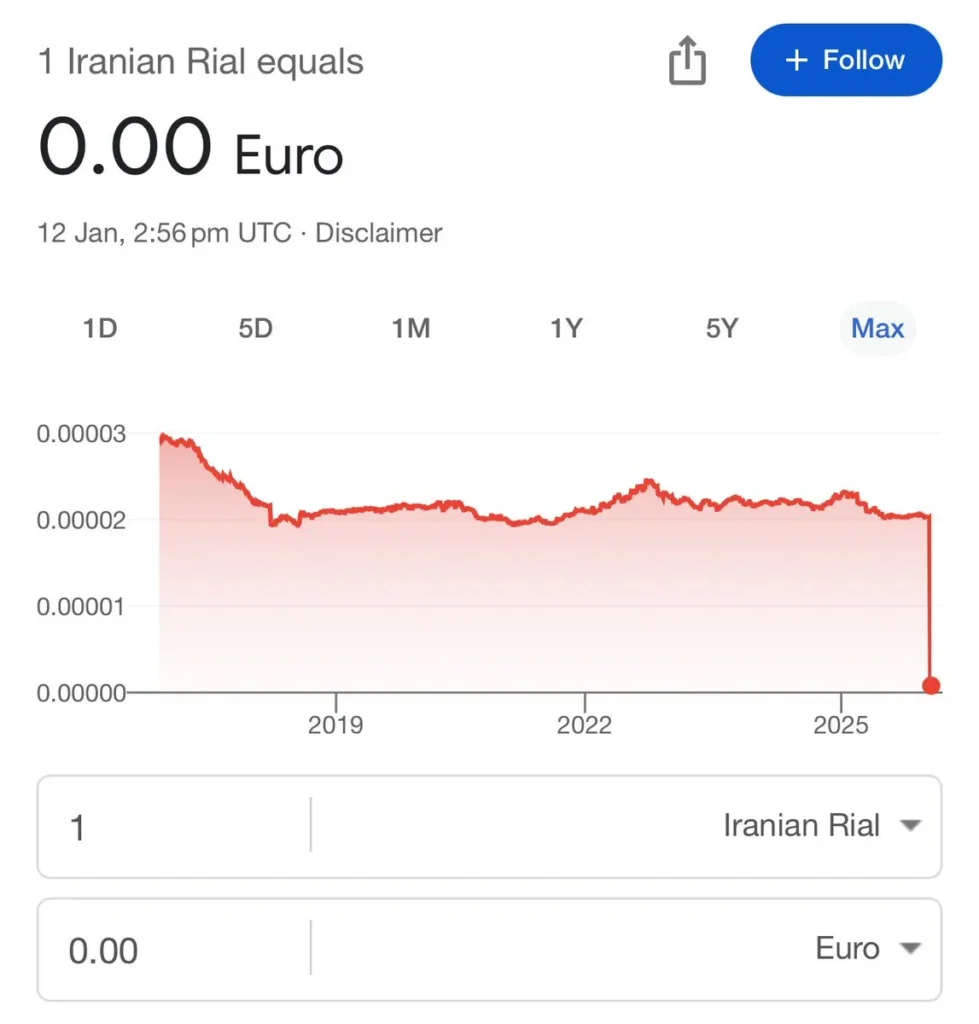
The Iranian currency has been losing value for decades, but the recent crash is vertical. According to data from foreign exchange monitoring sites like Bonbast, the Rial broke the 1,000,000 threshold against the greenback (USD) this week.
To put this Iranian Rial collapse into perspective:
- In 2015: 1 USD was roughly 32,000 Rials (at the time of the nuclear deal).
- In 2022: 1 USD was around 300,000 Rials.
- Today: 1 USD > 1,000,000 Rials.
This means the currency has lost nearly 97% of its value in less than a decade. While the government maintains an artificial “official rate,” the street rate—which dictates the actual price of food, electronics, and housing—tells the real story of hyperinflation.
2. Why is the Iranian Rial Collapsing?
The Iranian Rial collapse is not caused by a single event, but rather a “perfect storm” of economic and political pressures.
1. International Sanctions
The primary driver remains the crushing economic sanctions imposed by the United States and Western allies. These sanctions have cut off Iran’s access to the global banking system (SWIFT) and severely limited its ability to sell oil, its main source of revenue.
2. Geopolitical Tensions
Recent escalations in the Middle East have spooked the markets. Investors and citizens alike are panicking, fearing that military conflicts could lead to further economic isolation. In times of war or uncertainty, capital flight accelerates, leading to a faster Iranian Rial collapse.
3. High Inflation & Money Printing
To cover budget deficits, the government has resorted to printing more money. As the supply of Rials increases without economic growth, the value of each individual Rial decreases. The current inflation rate in Iran is officially above 40%, though independent economists estimate it to be much higher.
3. The Flight to Safety: Bitcoin and USDT
This is where the story becomes crucial for CoinDucky readers. When a national currency fails, people don’t just sit and watch their savings evaporate. They look for an exit.
In Iran, that exit strategy is increasingly becoming Cryptocurrency.
The Rise of USDT (Tether)
Digital dollars, specifically Tether (USDT), have become the de facto currency for many Iranians. Since they cannot easily open foreign bank accounts due to sanctions, they buy USDT on local exchanges or peer-to-peer markets to preserve their wealth.
Bitcoin as a Hedge
Just as we see in Turkey, Argentina, and Venezuela, the Iranian Rial collapse has pushed tech-savvy citizens toward Bitcoin. Bitcoin is viewed not just as an investment, but as a survival tool—a way to opt out of a failing monetary system.
“When your money loses 10% of its value in a single day, holding Bitcoin—even with its volatility—feels safer than holding cash.”
4. What Does This Mean for the Global Economy?
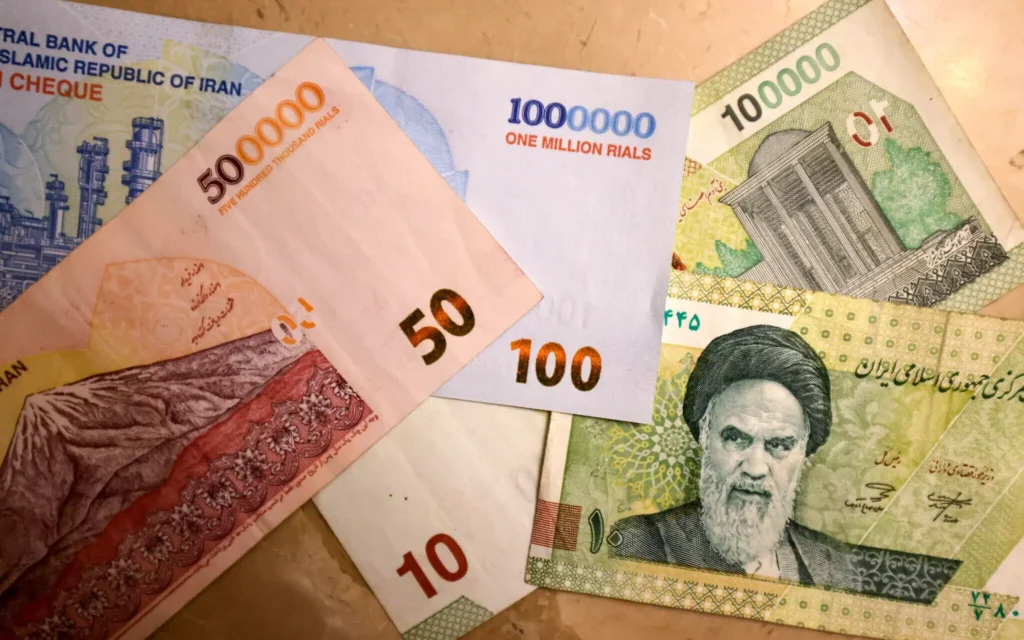
The situation in Iran is a case study for “Hyperinflation.” It serves as a reminder that fiat currencies are not store-of-value assets. They are subject to government policy and geopolitical risk.
For global investors, the Iranian Rial collapse reinforces the investment thesis for “Hard Assets”:
- Gold: The traditional safe haven.
- Bitcoin: The digital safe haven.
- Real Estate: Physical property.
As trust in central banks wavers globally, the demand for assets that cannot be printed or sanctioned is likely to grow.
Conclusion
The Iranian Rial collapse crossing the 1,000,000 mark is a tragedy for the local economy, but a powerful lesson for the world. It proves that financial stability should never be taken for granted.
As fiat currency volatility increases, the utility of cryptocurrencies like Bitcoin and stablecoins becomes undeniable. They offer a lifeline for those trapped in collapsing economies and a hedge for investors worldwide.
👉 Protect your wealth: Don’t wait for a crisis. Learn How to Buy Bitcoin Safely and read our guide on How to Secure Your Crypto Wallet today.